
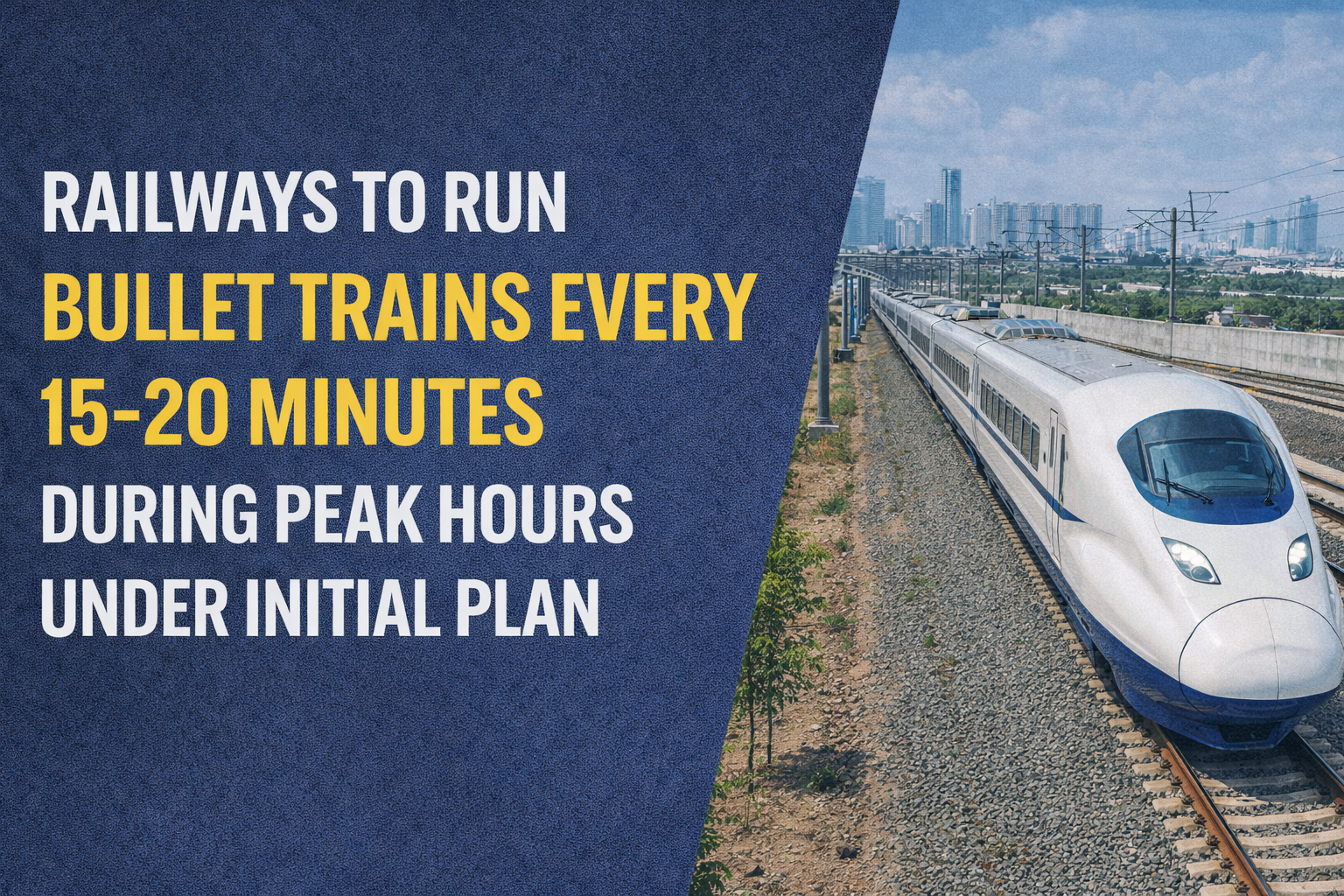
India’s ambitious bullet train project is steadily moving from vision to reality. According to initial planning discussions, Indian Railways is considering running bullet trains every 15–20 minutes during peak travel hours once operations begin. This move signals a major leap in the country’s transport infrastructure, aimed at offering faster, safer, and more reliable intercity travel. The proposal reflects growing confidence in high-speed rail demand across major economic corridors.
Peak Hour Frequency to Match Global Standards
Contents
The plan to operate bullet trains at 15–20 minute intervals during peak hours is designed to handle heavy passenger demand efficiently. Morning and evening travel windows, when commuters and business travelers dominate, are expected to see the highest frequency. Such scheduling mirrors global high-speed rail networks in countries like Japan and China, where frequent services ensure minimal waiting times and seamless connectivity between cities.
Mumbai–Ahmedabad Corridor at the Center
The Mumbai–Ahmedabad High-Speed Rail (MAHSR) corridor remains the flagship route for India’s bullet train ambitions. With construction progressing in phases, this corridor is expected to set the benchmark for future high-speed rail projects. Running frequent bullet trains on this route will drastically reduce travel time between the two financial hubs—from over six hours to nearly two hours—boosting productivity, tourism, and business mobility.
Boost to Economic Growth and Urban Development
High-frequency bullet train services are expected to generate significant economic benefits. Faster travel encourages regional integration, promotes real estate growth near stations, and supports the development of smart cities and industrial clusters. Cities along the bullet train route could witness increased investments, job creation, and a rise in GDP contribution. Improved connectivity often acts as a catalyst for balanced regional development.
Passenger Comfort and Operational Efficiency
Running bullet trains at regular short intervals will also enhance passenger comfort and convenience. Reduced crowding, predictable schedules, and high punctuality are key advantages. From an operational standpoint, frequent services allow better asset utilization and improved revenue potential for Indian Railways. Advanced signalling systems and automated train control will play a crucial role in maintaining safety at such high frequencies.
Challenges and Infrastructure Readiness
While the plan is ambitious, its success depends on infrastructure readiness, land acquisition progress, and system integration. Dedicated tracks, world-class stations, and robust maintenance systems are essential to sustain high-frequency operations. Authorities are closely monitoring global best practices to ensure that India’s bullet train network meets international safety and performance standards from day one.
A Transformational Step for Indian Railways
The proposal to run bullet trains every 15–20 minutes during peak hours highlights Indian Railways’ commitment to modernizing the nation’s transport ecosystem. As planning moves forward, this initiative could redefine long-distance travel in India, making high-speed rail a preferred choice for millions. If executed as envisioned, India’s bullet train network will stand as a symbol of progress, innovation, and economic ambition.